
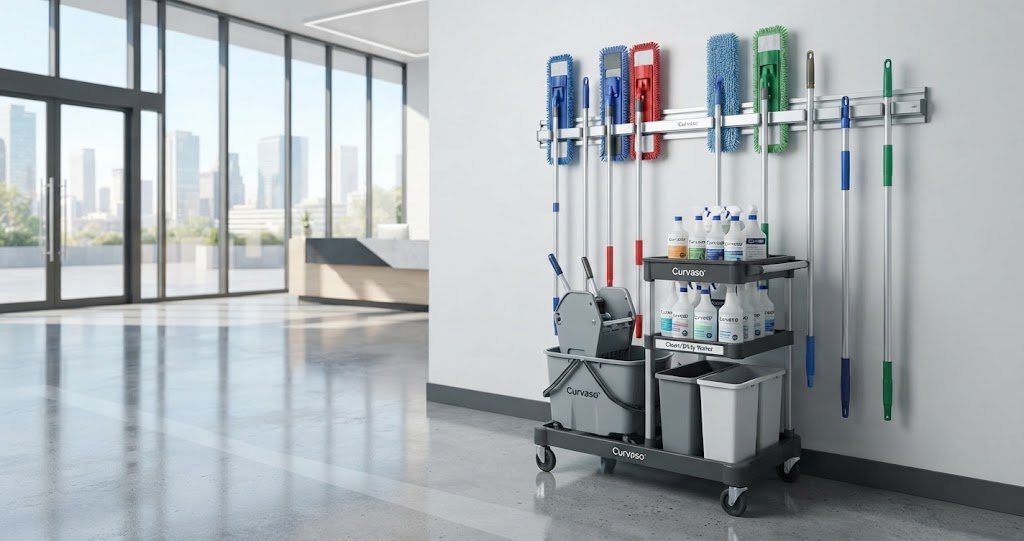
Maintaining spotless, hygienic floors in high-traffic commercial environments requires more than just a quick sweep and a standard mop. Whether managing a busy office, a healthcare facility, a retail store, or a commercial kitchen, choosing the right cleaning equipment directly impacts floor longevity, staff efficiency, and health and safety compliance.
Why Standard Mops Fall Short in Commercial Spaces
Traditional domestic mops often absorb dirt, spread bacteria across multiple rooms, and break down quickly under heavy commercial usage. Professional facilities require robust, purpose-built systems designed for heavy-duty cleaning:
- Enhanced Hygiene: Prevent cross-contamination between zones using colour-coded microfiber heads or dedicated multi-bucket systems.
- Ergonomic Design: Reduce physical strain on cleaning staff during long shifts with lightweight, adjustable handles and effortless wringing mechanisms.
- Durability: Heavy-duty materials withstand harsh industrial cleaning chemicals and frequent, rigorous sanitization routines.
Choosing the Right System for Your Facility
Different environments demand specialized setups to achieve optimal results:
- Commercial Kitchens & Food Prep Areas: Require heavy-duty degreasing mops and durable wringer buckets that can handle grease, oils, and frequent spills while meeting strict hygiene standards.
- Offices & Retail Spaces: Benefit from flat microfiber mops that glide smoothly around furniture, dry quickly, and leave floors streak-free for incoming customers and staff.
- Medical & Healthcare Facilities: Demand strict sanitation protocols, often utilizing pre-soaked microfiber systems or touchless disposal methods to eliminate pathogen spread.
Best Practices for Commercial Floor Maintenance
- Pre-Sweep Thoroughly: Always remove loose debris, dust, and large particles with a broom or industrial dust mop before introducing liquids to prevent muddy residue.
- Use the Right Solution: Match your cleaning chemical to your flooring type (e.g., pH-neutral cleaners for polished concrete or sealed wood; heavy-duty degreasers for tile kitchens).
- Change Water Regularly: In traditional bucket systems, dirty water leaves films and streaks. Switch out cleaning solutions frequently to ensure floors are genuinely clean.
- Proper Equipment Care: Launder microfiber pads or sanitize bucket interiors at the end of every shift to prevent mold, odors, and bacterial buildup.
Upgrade your janitorial setup today with professional-grade tools designed to keep your business immaculate, safe, and welcoming.